Waiting as Infrastructure
Urban Transit as Lived Experience
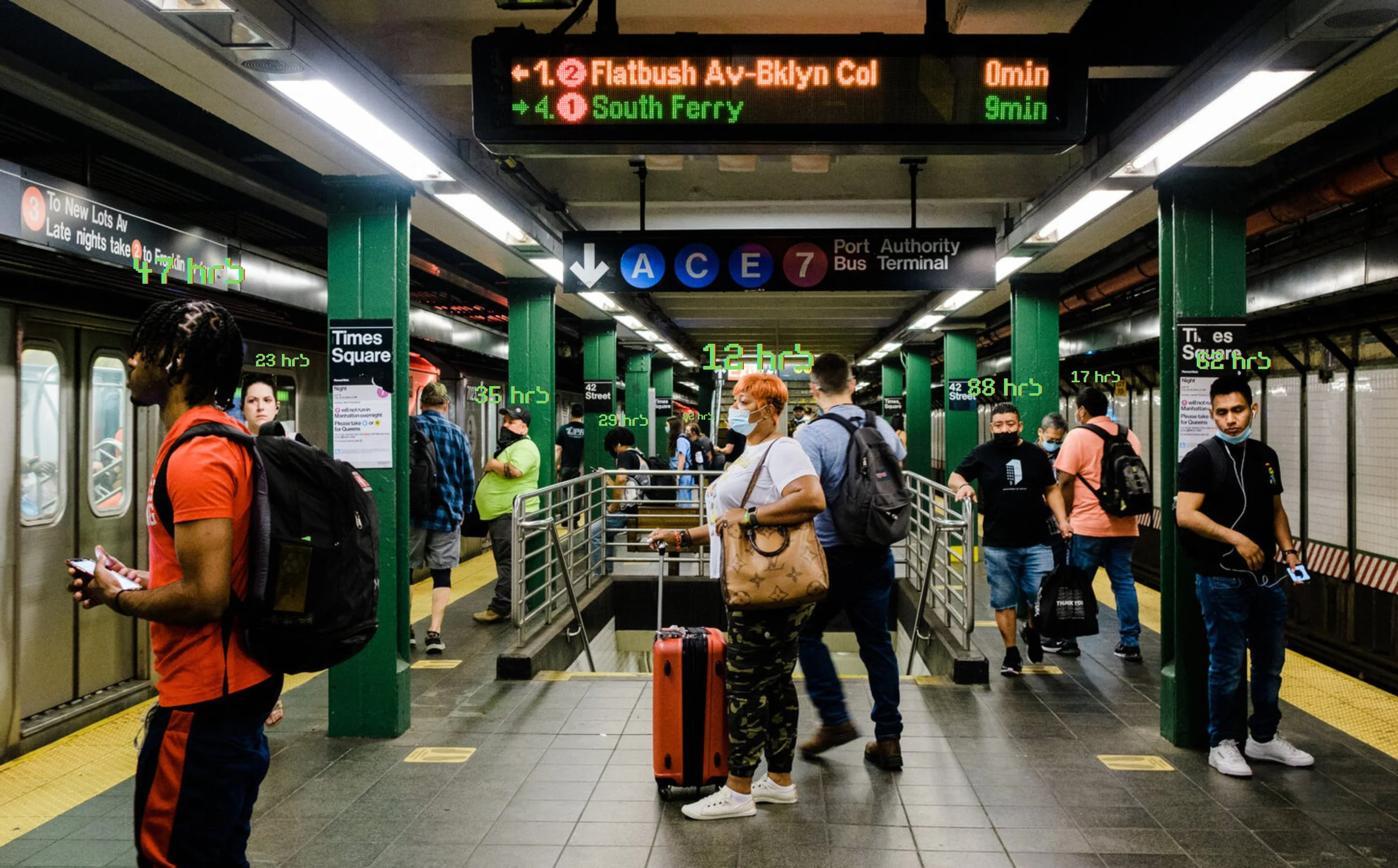
This project examines waiting as a structural condition embedded within New York City’s subway system. Rather than treating delays as isolated inconveniences, the work frames waiting as a form of infrastructure, a recurring and normalized experience shaped by systems beyond individual control.
The project began with a simple question: What does waiting look like when it is treated as a system rather than an inconvenience? Instead of mapping efficiency or service frequency, the focus shifts to lived time, the moments commuters spend stationary, anticipating movement, and adjusting their routines around uncertainty.
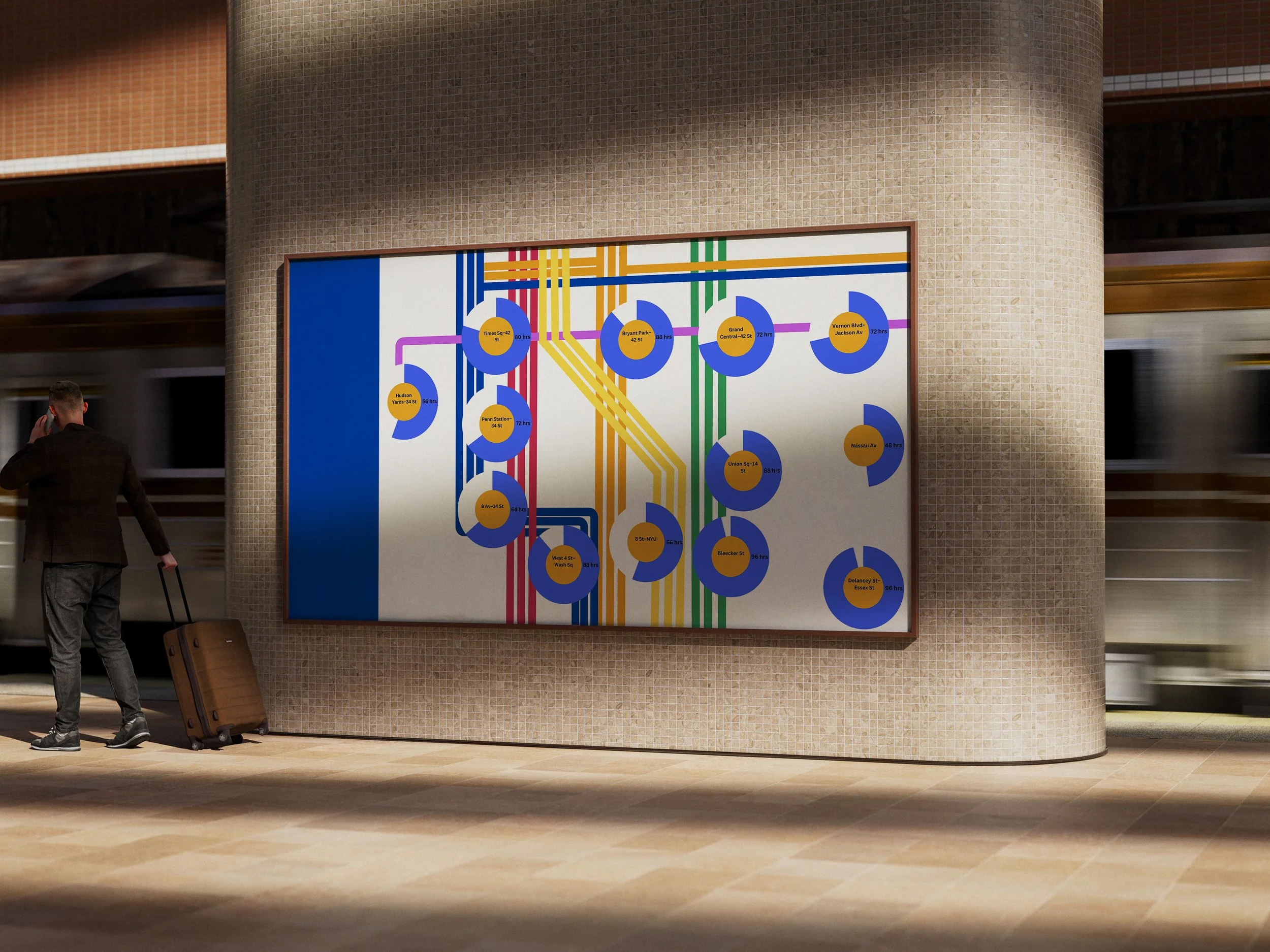
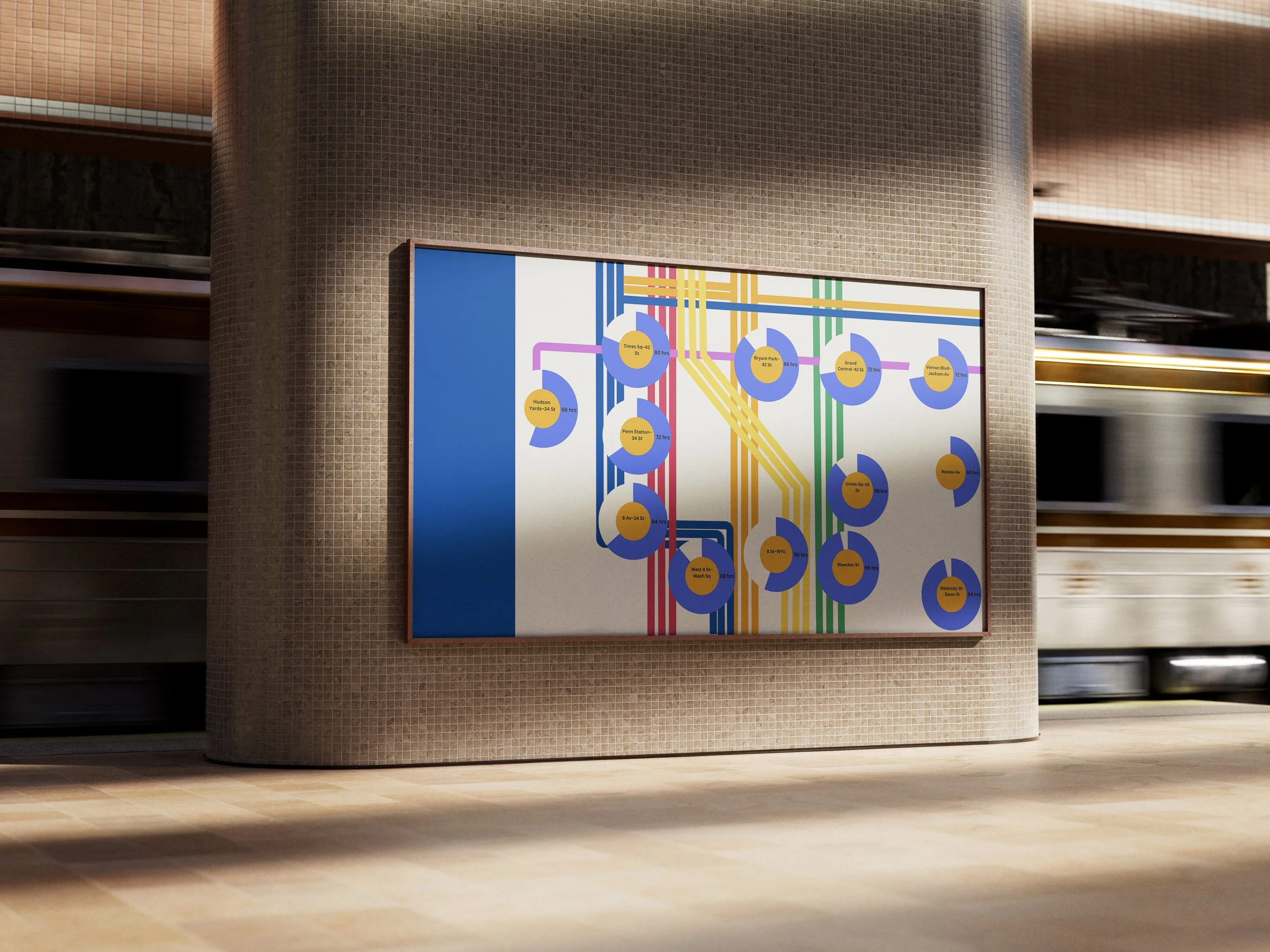
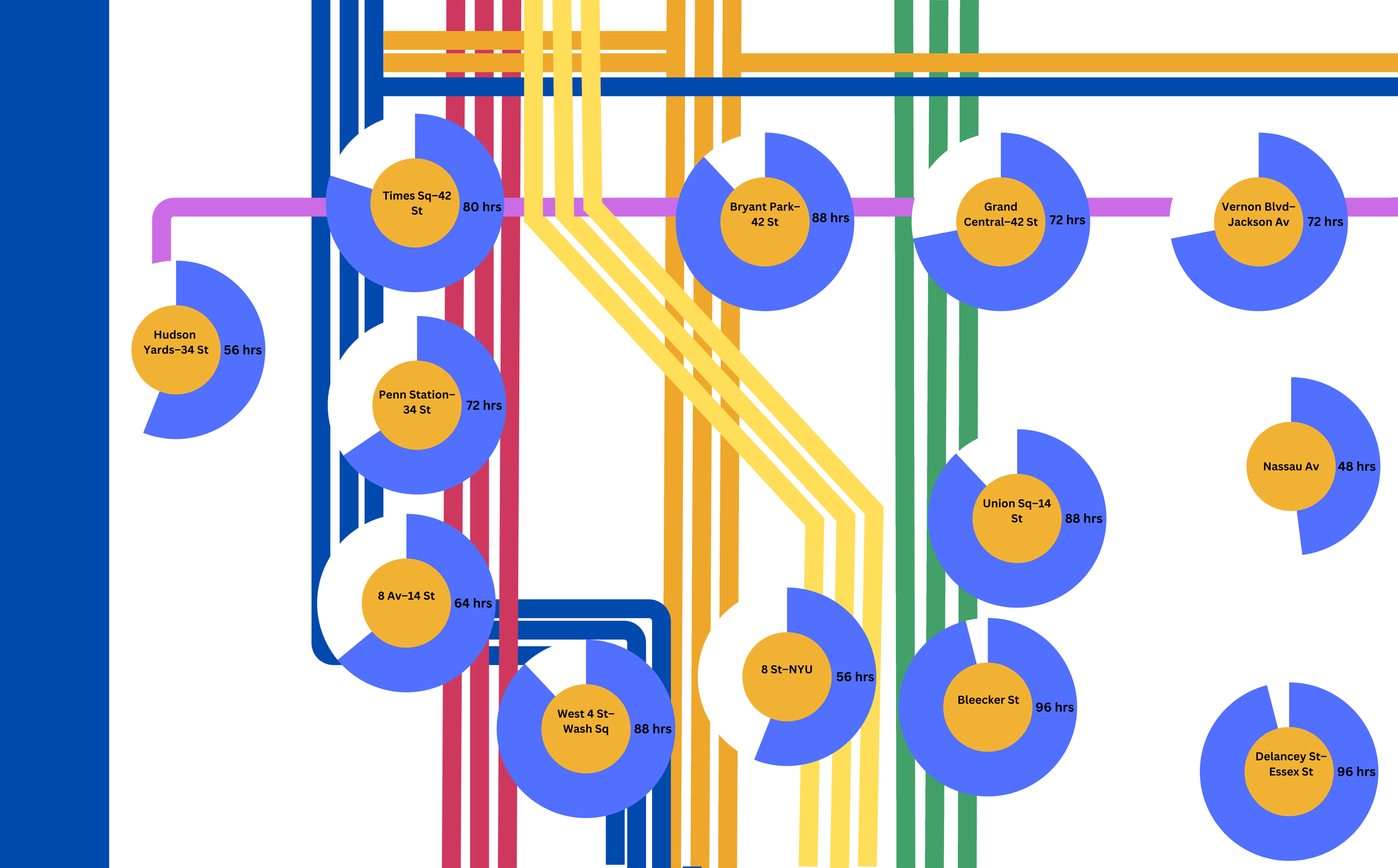
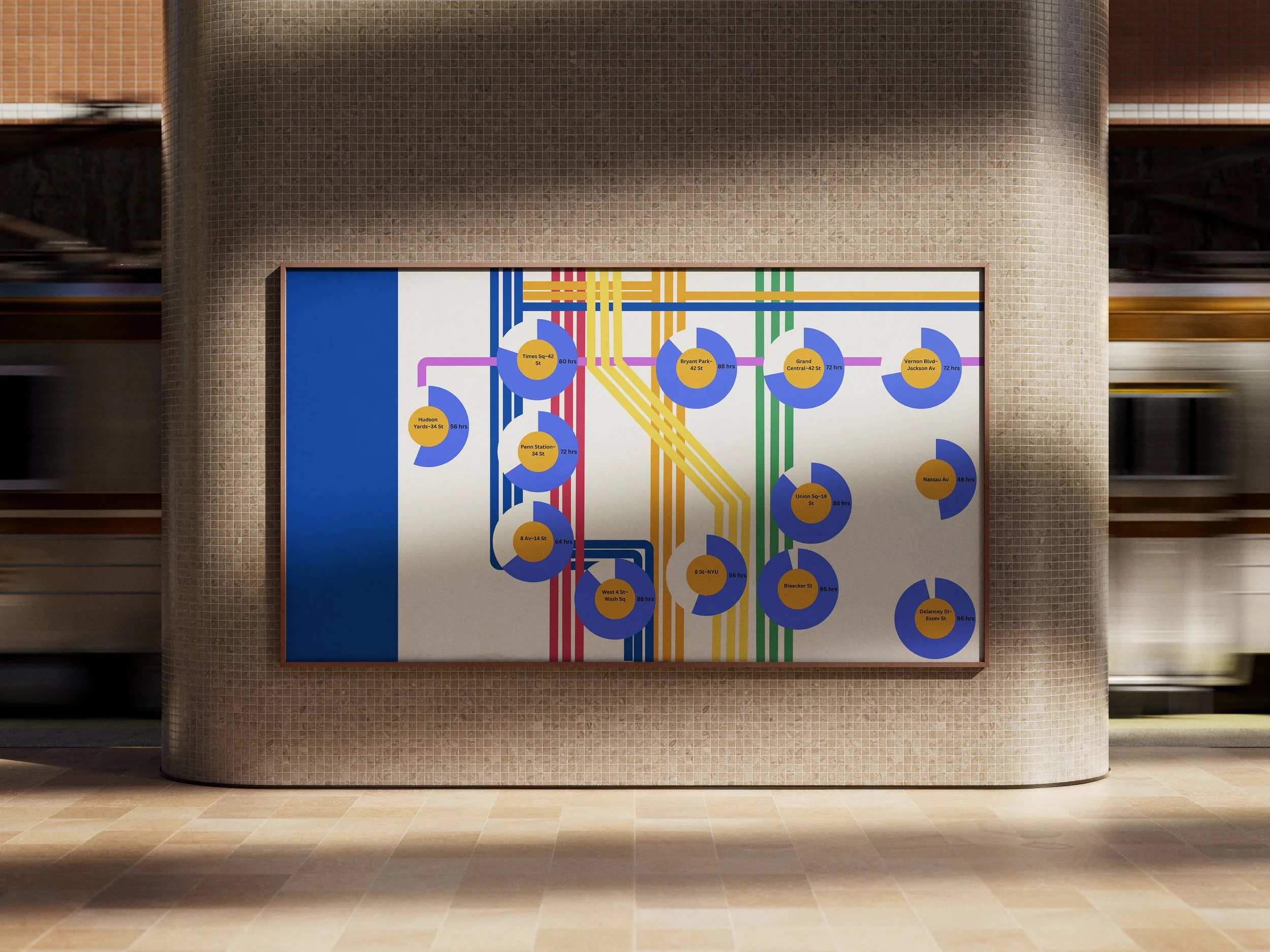
Each diagram represents a single subway station using a normalized annual time scale of 100 units. The filled portion of each donut reflects the proportion of that cycle lost to waiting, translating fragmented minutes into a comparative measure of accumulated time. This abstraction prioritizes legibility and comparison over minute-level precision, allowing patterns of inequality and inefficiency to surface visually.
Stations were selected across Manhattan, Brooklyn, and Queens to capture a range of commuting conditions, from major transit hubs to neighborhood stops. Waiting proportions were estimated using publicly available service frequencies, transfer complexity, and scheduling patterns, then applied consistently across all stations. By compressing lived time into a normalized system, this project reveals how waiting operates quietly and unevenly across the city. What appears minimal in daily experience becomes significant when viewed as infrastructure, not something that happens occasionally, but something that structures everyday life.
Methodology
Normalized annual time scale (100 units per station)
Two trips per day, approximately 240 commuting days per year
Station-specific waiting estimates based on service frequency and transfer conditions